What Google Maps collects
Google Maps collects your search history, location history (Timeline), routes driven, places visited, time spent at locations, and connects all this to your Google account. This data is used for ad targeting across Google's ecosystem. Even with location history 'paused,' Google still collects some location data through Maps searches.
What Apple Maps collects
Apple Maps uses random identifiers that rotate, so searches can't be linked to your Apple ID over time. Your search history isn't stored on Apple's servers. Route data is fuzzy -- Apple sees approximate routing segments, not your complete journey. Apple doesn't have an ad business built on location data.
The practical difference
After searching for 'divorce lawyer' or 'oncologist' in Google Maps, that query may influence ads you see across Google. In Apple Maps, the search stays on your device. After navigating to a sensitive location in Google Maps, that visit appears in your Timeline and may be used for targeting. Apple Maps doesn't build a location profile.
What about accuracy?
A common concern: does Apple Maps' privacy approach hurt accuracy? In 2026, the answer is mostly no. Apple Maps uses on-device machine learning, probe data from iPhones (anonymized and aggregated), and partnerships with TomTom and other data providers. Traffic, ETAs, and points of interest are comparable to Google Maps in most regions.
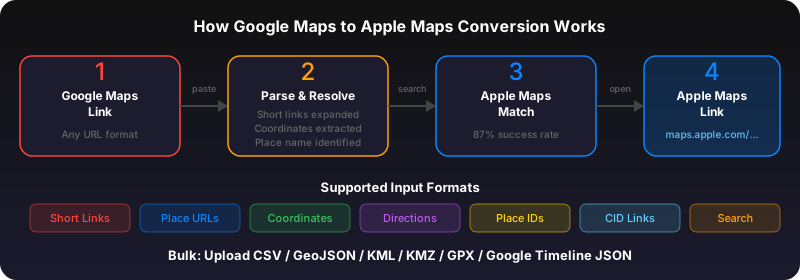
Use GoToAppleMaps to convert your Google Maps links to Apple Maps in seconds — free, private, no signup.
Frequently asked questions
Apple's privacy claims are backed by technical architecture: random rotating identifiers, on-device processing, differential privacy for aggregated data. Third-party audits and Apple's privacy nutrition labels confirm the approach. Apple's business model (hardware sales) doesn't depend on your location data.
You'll lose Google's deeper review database and Street View historical imagery. You'll gain Look Around (Apple's equivalent), better Siri integration, Guides, and offline maps. Most daily navigation needs are equally well-served.